How to Create a Compelling Brand Story Video in 2025 (A Step-by-Step Guide)

Creating a brand story video isn’t just about scripting and shooting; it’s about navigating stakeholder approvals, proving its value, and managing the anxiety of putting your company’s “why” on screen. You know a simple product demo won’t build the trust you need, but the path from a great idea to a final video that justifies its budget is often unclear.
This guide provides a tested method for producing a brand story video that connects with your audience and delivers measurable results. We will walk through a complete framework, from getting stakeholder buy-in to measuring ROI, using the real-world case study of a marketing lead who faced these exact obstacles.
What Is a Brand Story Video? (And How It Differs From an Explainer)
If you’re asking, what is a brand story video, you’ve identified a need to connect with your audience beyond features and benefits. A brand story video is a strategic asset that communicates your company’s purpose, mission, and values. Unlike a product explainer video, which focuses on what your product does, a brand story video focuses on why you do it. Its primary goal is to build long-term trust and affinity by sharing the human element behind the business.
Brand Story Video vs. Explainer Video: The Core Distinction
The primary distinction between a brand story video and an explainer lies in intent. One builds a relationship; the other drives an immediate action.
Brand Story Video: Answers the question, “Why should I care about your brand?” It features the founder narrative, company mission, and the larger problem you aim to solve. The objective is to build an affinity and a lasting connection.
Explainer Video: Answers the question, “How does your product solve my immediate problem?” It is functional, often using screen recordings and motion graphics to demonstrate features and benefits. The objective is to drive conversion by showing utility.
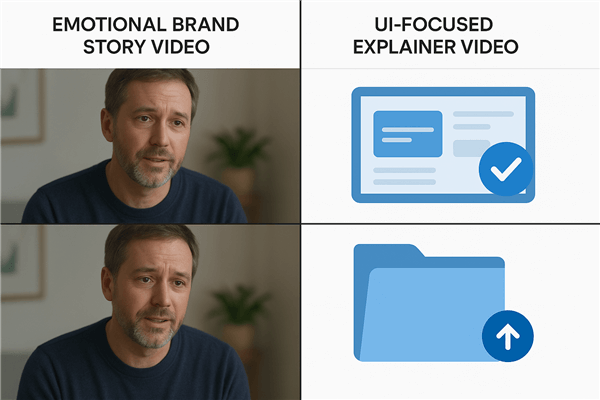
Brand Story Video vs Explainer Video
Step 1: Secure Stakeholder Buy-In to Avoid Endless Revisions
Before writing the script, manage internal expectations—a step where many video projects fail. Maya, a marketing lead at a sustainability startup, avoided endless stakeholder feedback by using a simple three-step alignment process:
- Align on the Creative Brief: She shared a one-page overview covering the video’s objective, audience, key message, and business goal.
- Get Script Sign-Off: After the brief was approved, she drafted the script and gathered all stakeholders for one review. Everyone had to formally sign off, locking the narrative before production.
- Define the Feedback Loop: She set clear limits: two feedback rounds only—story edit, then final polish—preventing late, unstructured changes.
Step 2: Write a Script That Connects (A 6-Part Framework)
To avoid a generic narrative, you need a solid structure. This 6-part brand story video framework provides a clear sequence for your brand story video script, ensuring your message is both compelling and coherent. Instead of just a list, use these sections as a worksheet with prompting questions to uncover your unique story.
The Hook (0-5 seconds): Grab attention with a surprising statistic, a provocative question, or an evocative statement that frames the problem.
Prompting Question: What is the most shocking or relatable truth about the problem we solve?
The Origin (5-20 seconds): Humanize your brand. Share the founder narrative—the specific moment of insight or frustration that sparked the company’s creation.
Prompting Question: What was the exact moment you knew this company had to exist? What was the frustrating status quo you wanted to change?
The Mission (20-35 seconds): State your purpose clearly. What change are you trying to make in the world? This is your “why.”
Prompting Question: If we are successful, what does the world look like? Finish this sentence: “We exist to…”
The Proof (35-50 seconds): Build credibility with authenticity and social proof. Show, don’t just tell. For a SaaS company, this could be a customer explaining a key workflow improvement. For a DTC brand, it could be footage of your product being used in a real-world setting.
Prompting Question: Who can speak to our impact better than we can? How can we visually demonstrate our solution in action?
The Vision (50-75 seconds): Paint a picture of the future. What does the world look like if your mission is successful? This inspires the audience to join your journey.
Prompting Question: What is the inspiring, hopeful outcome of our work?
The Call to Action (75-90 seconds): Give your audience a clear next step.
Prompting Question: What is the single most valuable action someone could take after watching this?
Step 3: Plan Your Production Essentials
Good production doesn’t happen by accident. Maya used a simple shot list and a bank of interview questions to ensure her one-day shoot was efficient and captured everything she needed.
Sample Interview Questions
What was the single biggest frustration that led you to start this company?
Describe the moment you knew you were on the right track.
What’s the one thing people misunderstand about this industry?
If you could show our customers one thing behind the scenes, what would it be?
What does success look like for our customers? For the world?
Sample Shot List
A shot list is a simple checklist of every visual you need to capture.
| Scene | Shot Description | Location |
| 1 | Wide shot of Founder A at their desk, looking thoughtful. | Office |
| 2 | Close-up of Founder B’s hands sketching on a whiteboard. | Lab |
| 3 | Medium interview shot of Customer X in their environment. | Remote |
| 4 | B-roll: Slow-motion shot of the recycling technology in action. | Lab |
| 5 | B-roll: Team collaborating around a table. | Office |
Step 4: Define Your Budget and Production Tier
Understanding the cost of your brand story video is critical. The price can range dramatically, so choosing the right tier for your goals and resources is key.
Production Tier 1: DIY / In-House (< $2,000)
Best for a brand story video for small businesses or early-stage startups.
Gear: Pro-grade smartphone, a wireless microphone kit (like the Rode Wireless Go II), a tripod, and a simple 3-point LED lighting kit.
Key Costs: Music licensing ($50-$300 from a site like Artlist), stock footage, and editing software. AI-powered editing tools like FocuSee can significantly speed up post-production.
What Is FocuSee?
FocuSee is an AI-powered video creation and editing tool designed for marketers, founders, and small teams who want to produce polished promo videos, product demos, and screen-based content—without needing advanced video editing skills.
Unlike traditional editors that require manual cutting, keyframing, and styling, FocuSee automates the most time-consuming stages of post-production. This makes it ideal for DIY setups where time and resources are limited.
How FocuSee Reduces Editing Time
FocuSee includes several features engineered specifically to speed up the workflow for in-house creators:
- AI Smart Editing Engine: Automatically removes silences, filler words, and awkward pauses —instantly tightening pacing without manual timeline scrubbing.
- Auto Zooms & Cursor Highlighting: Perfect for SaaS or product demos. FocuSee detects important actions on the screen and applies gentle zooms, spotlights, or cursor emphasis to guide viewer attention.
- Dynamic Subtitles (Brand-Ready): One-click captions that match your brand colors, fonts, and layout. No need to style captions manually.
- Auto Layout Templates: Includes picture-in-picture and clean framing for founder videos or tutorial content.
- Multi-Platform Export: Instant 9:16, 1:1, and 16:9 exports optimized for TikTok, Reels, YouTube Shorts, or web landing pages.
Together, these features can cut post-production time from several hours to under 30 minutes, allowing small teams to produce more content with less effort.
Here is a straightforward workflow that small teams can follow:
Step 1. Upload Your Footage
Drag and drop your smartphone clips, screen recordings, or product shots into FocuSee. It supports the most common formats.
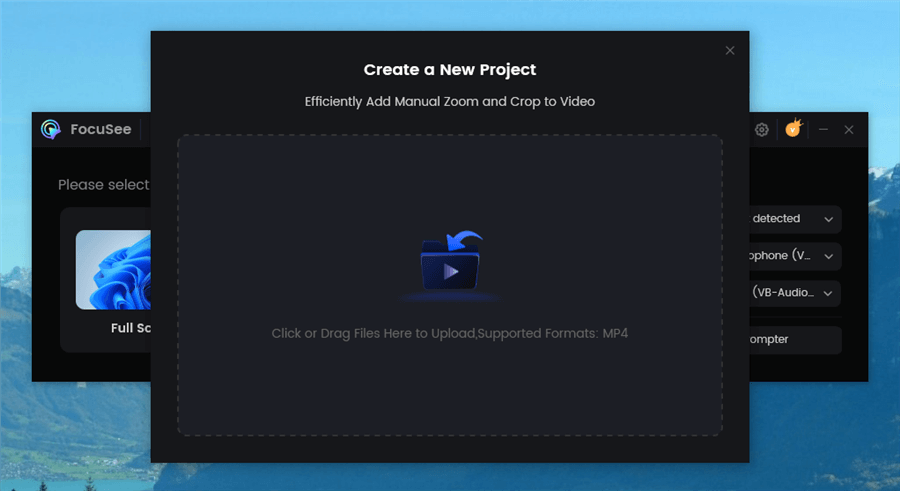
Upload Your Footage
Step 2. Enable AI Smart Editing
Turn on Smart Cut to automatically remove silence and filler. FocuSee analyzes pacing and trims your clips into a clean, watchable sequence.
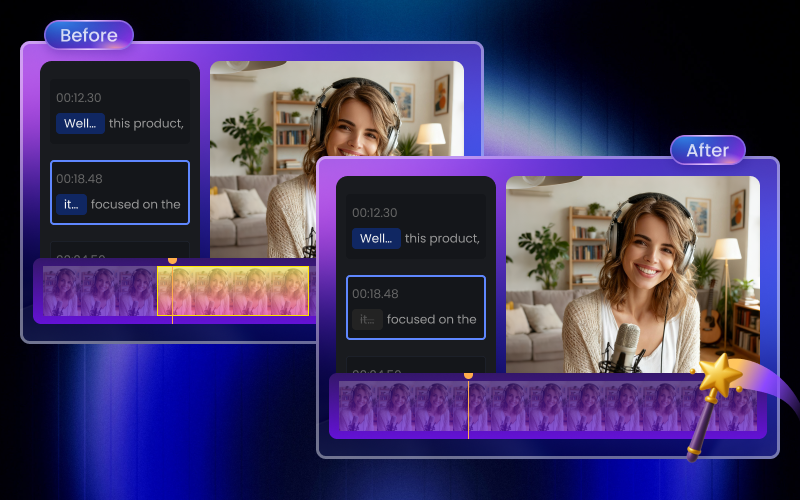
AI Silence & Filler-Word Removal
Step 3. Apply Auto Captions
Click Generate Subtitles. It supports more than 50 languages.
Step 4. Add Zooms and Spotlights
FocuSee detects product actions or highlights UI elements automatically.
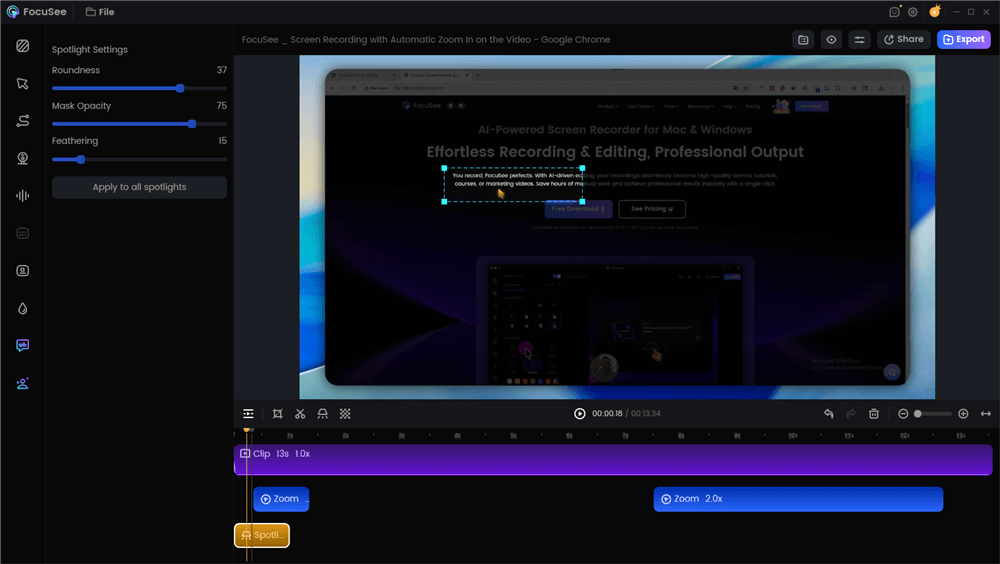
Spotlight Effect
Step 5. Add Your Brand Logo
Upload your brand logo to add a custom watermark to your video.
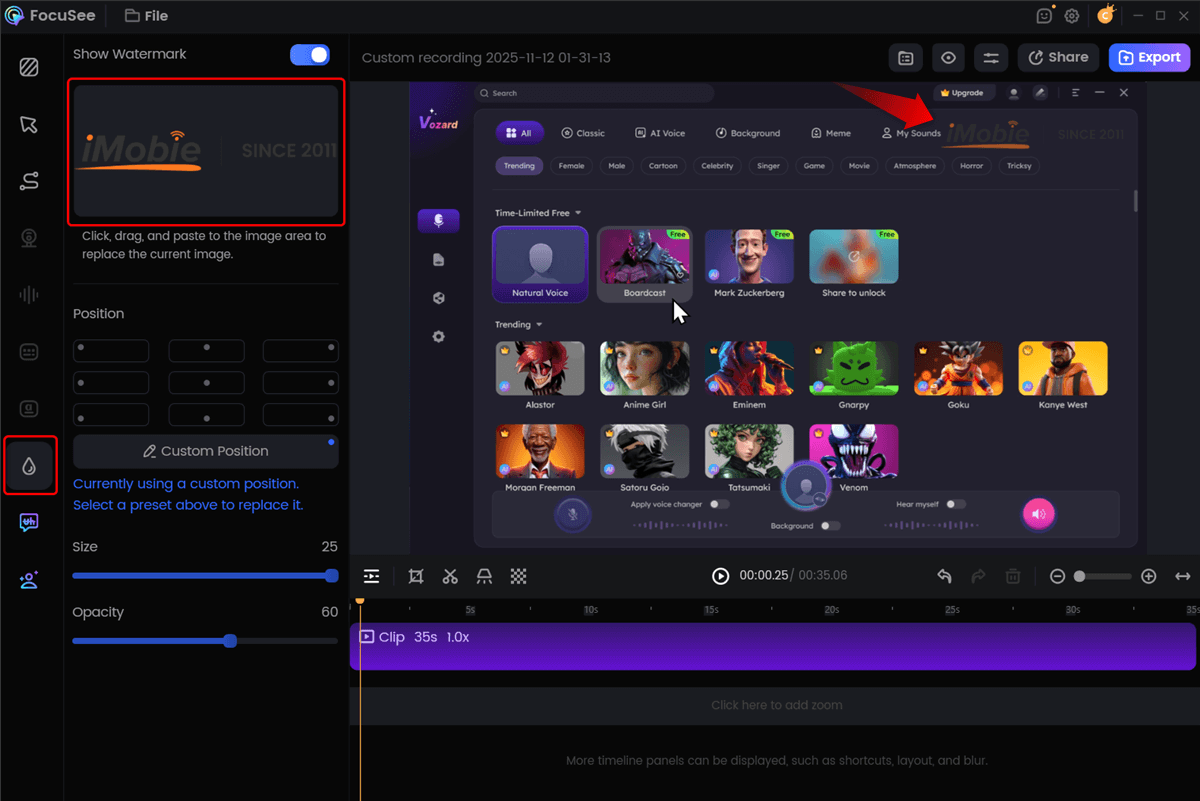
Add Custom Watermark
Step 6. Export for Platforms
Choose from auto-generated aspect ratios:
- 9:16 for TikTok/Reels
- 1:1 for feed
- 16:9 for YouTube or website
Export your final video in minutes.
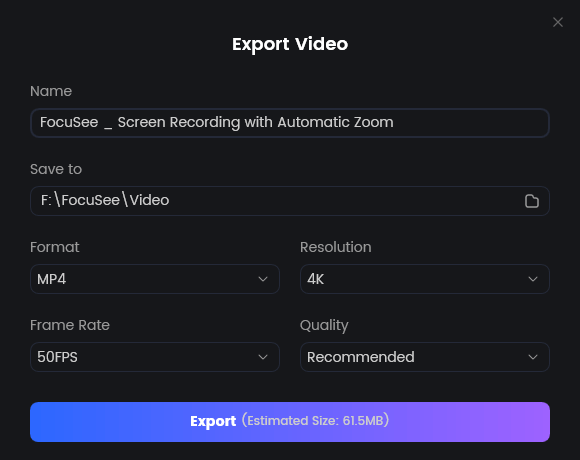
Export Your Video
Production Tier 2: Hybrid / Freelancer ($5,000 – $15,000)
You hire specialists but manage the project internally.
Crew: Director of Photography/Videographer and a Sound Recordist.
Key Costs: Freelancer day rates ($750-$2,000/day per person), gear rental, and location fees.
Production Tier 3: Full Agency ($25,000+)
An external agency manages the entire process from concept to distribution.
Crew: Full production crew including a Producer, Director, and Gaffer.
Key Costs: Agency retainer, custom music composition, location scouting.
Step 5: Create a Modular Distribution and Measurement Plan
A great video is ineffective without a solid plan to distribute it and measure its impact. Your goal is to prove ROI by connecting video views to business goals.
The Modular Asset Matrix
Treat your video as a suite of assets. Maya’s team planned their shoot to create a full matrix of deliverables from a single day of filming.
- 90-second Master Cut (16:9): For the website’s landing page and YouTube.
- 60-second Cut (16:9): For YouTube pre-roll ads.
- 30-second Cut (1:1 Square): A problem-solution arc for paid amplification on LinkedIn.
- 15-second Hook (9:16 Vertical): A high-impact opening for Instagram Stories.
Frequently Asked Questions About Brand Story Video Production
How long should a brand story video be?
For a website landing page, an ideal runtime is 60–120 seconds. For social media, aim for 30-60 seconds for feed posts and under 15 seconds for vertical formats like Instagram Stories.
What gear do I actually need for a DIY setup?
Focus on audio first. You need a modern smartphone, an external lavalier microphone for clean audio (like a Rode SmartLav+), a stable tripod, and a basic 3-point LED lighting kit. Great audio is the most critical element for professionalism.
How do I make our founder comfortable on camera?
Preparation is key. First, share the interview questions in advance. Second, consider using a teleprompter app on a phone or tablet. This allows them to read a script while maintaining eye contact with the camera, which tools like FocuSee’s built-in teleprompter can facilitate.
How do I write a script that avoids clichés?
Use the 6-part brand story video framework as a worksheet. Answering the prompting questions for each section forces you to ground your narrative in specific, authentic moments from your company’s journey, which is the best defense against corporate jargon.
What are the essential legal steps?
Two things are critical: talent releases and music licensing.
Talent Release Forms: Have every person who appears identifiably in your video sign a release form. This document gives you legal permission to use their image and voice. Key terms include the scope of use (web, ads, etc.), duration (in perpetuity is common), and confirmation that they are not being compensated beyond any agreed-upon fee.
Music Licensing: Never use popular music without a proper license. Use a royalty-free library (like Epidemic Sound or Artlist) and purchase a license that covers your intended use (e.g., a “Business” plan often covers online ads).
Take Control of Your Brand’s Narrative
Creating a powerful brand story video is an achievable goal when you move from high-level ideas to a concrete, step-by-step plan. By securing stakeholder buy-in early, using a structured framework for your script, and building a clear measurement strategy, you can produce a video that not only connects with your audience but also proves its value to your business. The biggest hurdles—internal feedback loops and demonstrating ROI—can be overcome with a clear process. Now you have the blueprint to stop worrying about the unknowns and start sharing your “why” with confidence.