The Tangible Benefits of Video Marketing in 2026: A Data-Backed Guide

If you’re frustrated by declining engagement and feel your static content is getting buried by social media algorithms, you’re not alone. Many professionals face budget paralysis, believing effective video is out of reach without expensive gear, or suffer from ROI uncertainty, questioning if the effort will pay off. This guide is designed to replace that ambiguity with a clear, data-backed workflow. We’ll show you how to turn the smartphone in your pocket into a powerful tool for building trust and driving growth, proving that authenticity, not a big budget, is the key to success.
The Data-Driven Case: Analyzing Video Content Search Visibility Impact
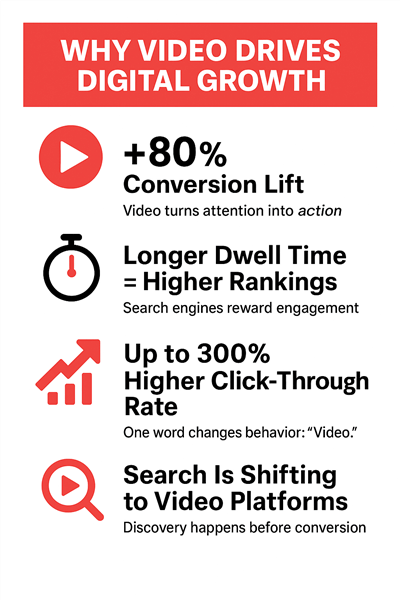
Before investing time or resources, it’s crucial to understand the quantifiable returns. The Search Visibility Impact of Video Content is no longer a secondary benefit; it is a primary driver of digital growth. When users encounter a video on a landing page, they spend significantly more time there, increasing a critical ranking signal known as dwell time. This tells search engines your content is valuable and answers the user’s query, which can lead to improved rankings. Data consistently shows that including video on a landing page can increase information retention rate and boost conversions by over 80%.
The Benefits of Video Marketing
The impact extends beyond your own website. Emails that mention “video” in the subject line see higher open rates, and including a video thumbnail can increase the click-through rate (CTR) by as much as 300%.
The most fundamental shift, however, is in user search behavior. For a growing number of people, especially younger demographics, platforms like YouTube and TikTok have become their primary search engines. A user looking for a tutorial or product review is now more likely to search on YouTube than on Google. This reframes video from a simple conversion tool to an essential discovery tool for zero-click search and top-of-funnel brand awareness.
Further Reading: Marketing Videos: The Ultimate Guide to Improve Your Business >
Accelerate Trust: Your Unfair Advantage in Brand Storytelling
While metrics like views and conversions are important, the most potent, yet often overlooked, benefit of video is its capacity to build trust at an accelerated rate. We call this “Trust Velocity.” To understand its power, consider this principle:
A 30-second raw video shot on a smartphone can build the kind of consumer trust that might otherwise take 5,000 words of copy to establish.
This concept is a game-changer for anyone who is camera-shy or fears their videos will look “cheap.” Your perceived limitation—a lack of a Hollywood-level production budget—is actually a strategic advantage. Authenticity has become a primary trust signal.
The reason is rooted in modern technology and human psychology. High-fidelity smartphone screens clearly transmit the micro-expressions and vocal tones that convey sincerity. This creates a powerful parasocial interaction, a one-sided relationship where the viewer feels a genuine connection to you. They aren’t looking for a flawless actor; they’re looking for a credible expert. A slightly imperfect, authentic video from someone passionate about their subject is far more trustworthy than a slick, impersonal advertisement.
Also Read: How to Create a High-Impact Testimonial Video >
Algorithm Fatigue Explained: Why Social Media Demands Video
If you’ve felt that your high-quality static images and thoughtful text posts are no longer reaching your audience, you are experiencing a real phenomenon. Social media platforms are engineered to maximize user dwell time, and their systems grant algorithmic priority to the content format that achieves this best: video.
This is one of the most significant social media video algorithm advantages. It’s not just a preference; it’s a business model. By prioritizing video, platforms keep users engaged longer. There’s also a hardware-level reason for this shift. Modern smartphones aren’t just for viewing content; they are premium media devices. Technologies like HDR make colors more vibrant, and 120Hz refresh rates make motion incredibly smooth in a way a static image can’t match. Video is the native format for the sensory experience these devices are built to deliver.
A critical factor in video’s dominance is the “Silent Consumption Reality.” Platform data reveals that up to 85% of users watch videos on mobile devices with the sound off.
- A static image with a long caption requires active reading.
- A video with dynamic, embedded captions can convey the same information in a more engaging, passive way that is ideal for scrolling.
This reality highlights the necessity of a mobile-first video strategy, where captions are a central component, not an afterthought. This focus also delivers significant accessibility benefits of captioned video, ensuring your message can be understood by all users, including those with hearing impairments.
Closing the Loop: A Simple Framework for Measuring Video ROI
Understanding the “why” is one thing, but proving the return on your investment is what truly matters. The “ROI Uncertainty” you feel is valid. Here is a simple, three-step framework to connect a video view to a tangible business outcome, like a demo request or a sale.
- Create a Trackable Link: Use a free tool like Google’s Campaign URL Builder to create a unique link for your video’s call-to-action (e.g., your pricing page or demo scheduler). Tag it with a source (e.g., “youtube”), medium (“social”), and campaign name (“trust-velocity-video”). This creates a UTM link.
- Place the Link Strategically: Add this unique link to your YouTube video description, your LinkedIn post text, or as the “swipe up” link in an Instagram Story. This is the only place you will use this specific link.
- Track Conversions in Analytics: In Google Analytics, you can now track exactly how many people clicked that specific link and completed a goal on your website (like filling out a form). You can now say, “Our latest video directly generated three qualified leads this week.” This replaces ambiguity with concrete data.
Choosing Your Workflow: A Comparison of Manual vs. Automated Video Production
Once you’re convinced of the “why” and know how to measure the “what,” you face the practical “how.” The two main approaches are a manual DIY method or a tool-assisted automated workflow. Understanding the trade-offs is key to avoiding technical overwhelm.
| Criteria | Manual Smartphone Method | Automated Tool Solution |
| Time Cost | High — hours of manual trimming and captions | Low — AI edits in minutes |
| Technical Skill | Moderate to high — editing experience needed | Low — polished results are automatically |
| Brand Consistency | Hard to maintain manually | Easy — templates and presets |
| ROI Velocity | Slow — delayed speed-to-market | Fast — quick production accelerates ROI |
Your decision depends on your most valuable resource. If you have significantly more time than money, the manual method is a viable starting point. However, if professional consistency and speed to market are your priorities, an automated tool offers a far superior return.
How FocuSee Streamlines Professional Video Creation
For professionals who value their time and a polished outcome, a tool like FocuSee is designed to eliminate the most common and tedious video production obstacles. It automates the technical work, allowing you to focus entirely on delivering valuable content.
Here is how its features provide a direct solution to the pain points we’ve discussed:
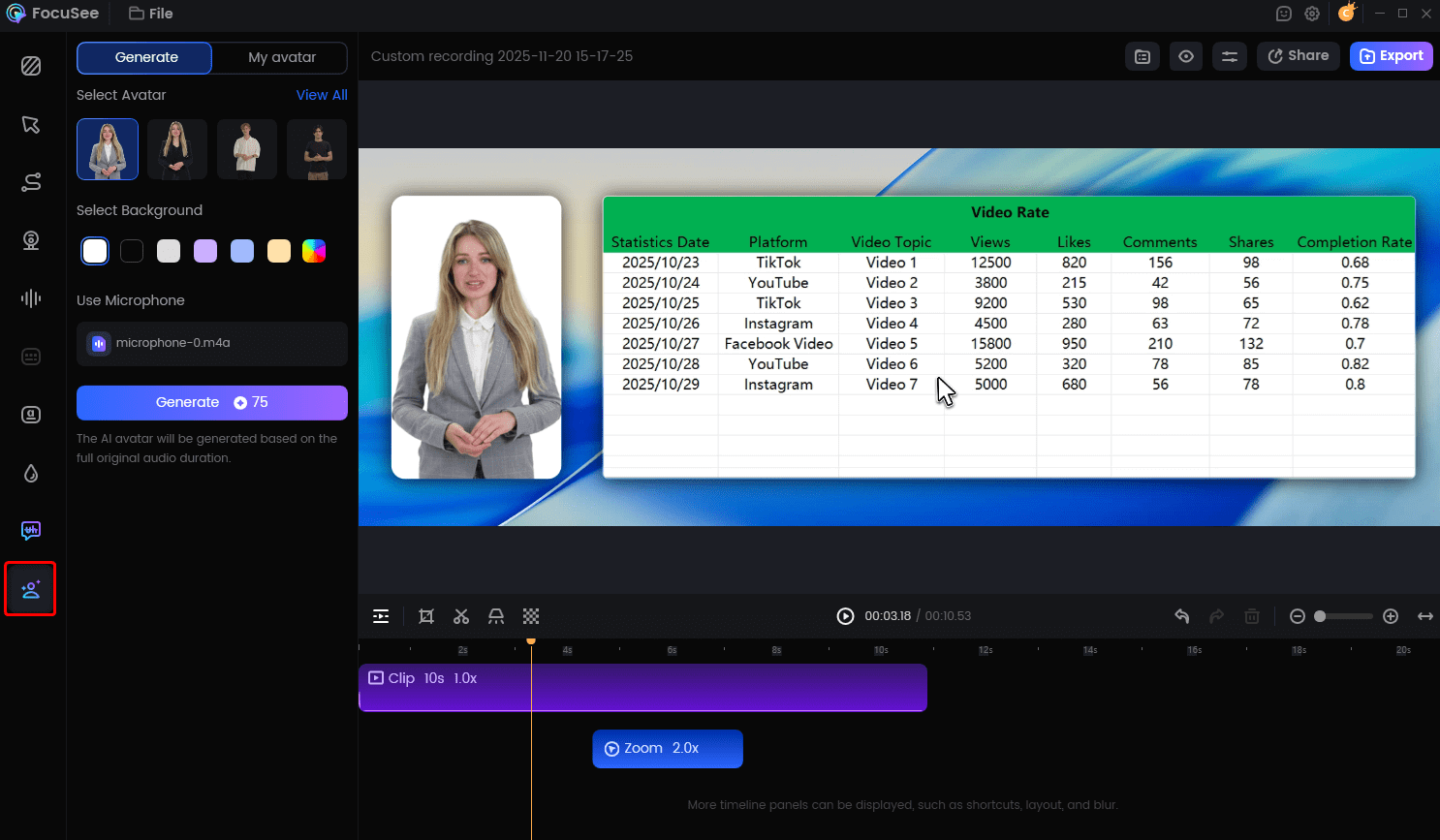
For the ‘Camera Shy’ Problem: If you aren’t comfortable on screen, FocuSee’s AI Virtual Avatar lets you present your material with a customizable avatar that syncs with your voice. This maintains a human element without the anxiety of being on camera.
Create Your AI Acatar
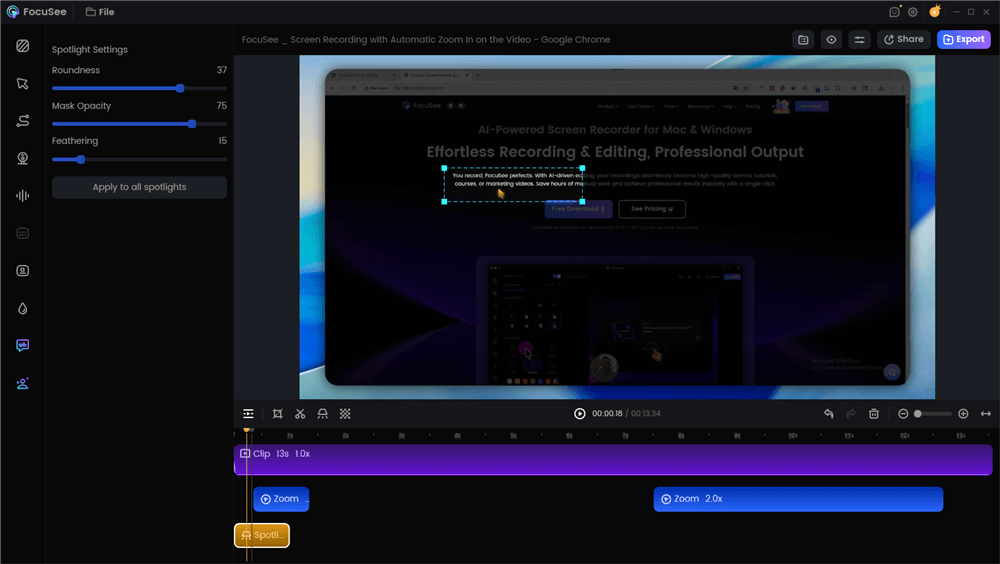
To Eliminate ‘Technical Overwhelm’: The Smart Cut feature automatically detects and removes filler words (“ums,” “ahs”) and long pauses, saving hours of manual editing. For tutorials, the Auto Zoom & Spotlight function intelligently follows your cursor and highlights key actions, creating a dynamic visual guide without any manual effort.
Spotlight Effect
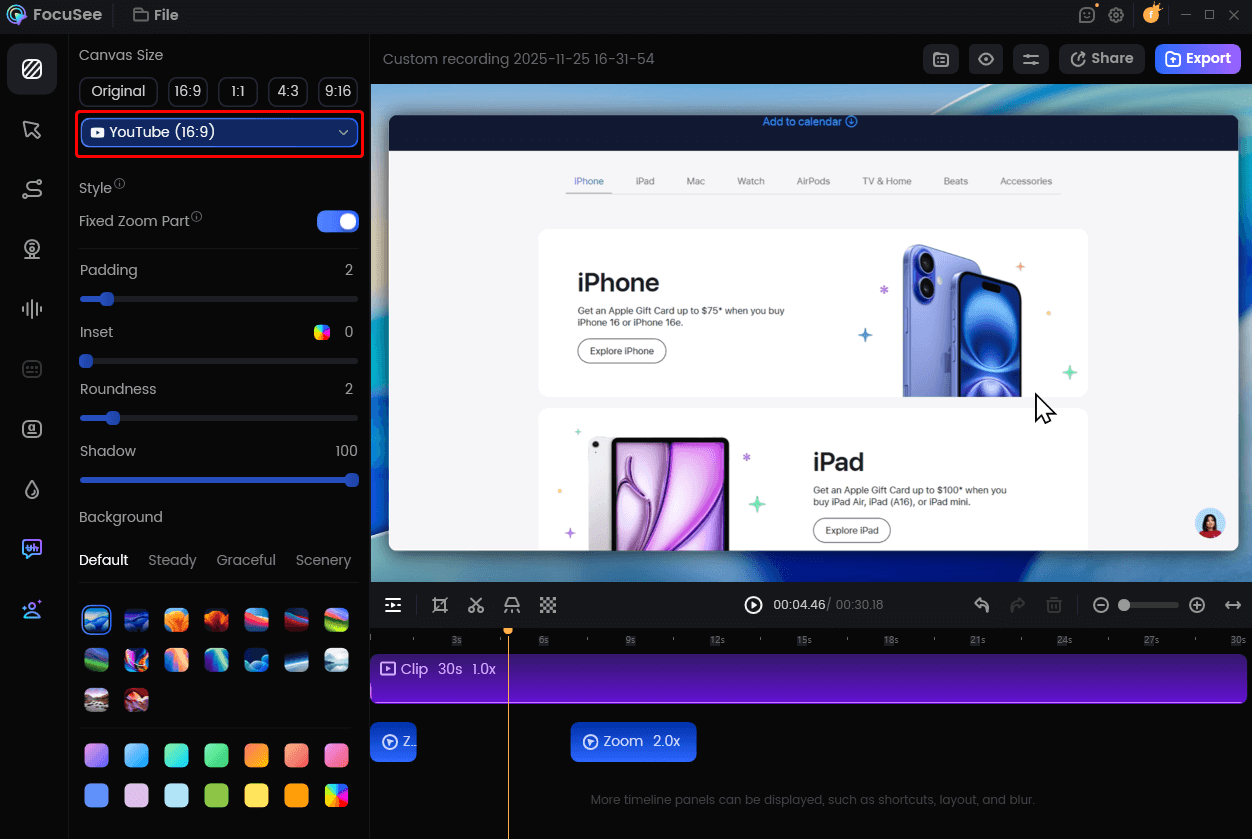
To Solve Aspect Ratio Confusion: With one click, Multi-size presets instantly format your video for any platform, ensuring your content looks professional everywhere. This simplifies cross-platform repurposing for YouTube (16:9), TikTok (a vertical aspect ratio of 9:16), and more.
Change Video Size for YouTube
The core benefits of video marketing are no longer theoretical. They are measurable, impactful, and more accessible than ever before. The primary obstacles—fear of high costs, technical complexity, and being on camera—have been effectively solved by modern tools. Instead of chasing fleeting virality, focus on building trust and providing value. An automated tool like FocuSee removes the friction from video production, allowing you to create professional, engaging content in minutes, not hours. Start by answering one customer question on camera. You have the tool in your pocket and a clear solution to make it shine.
Explore the FocuSee feature tour to see how you can create your first professional video today.
FAQs on the Benefits of Video Marketing
Does video marketing actually help my website rank higher on Google?
Yes, indirectly but effectively. Video significantly increases dwell time—the amount of time users spend on your page. This is a strong positive signal to Google that your content is valuable, which can improve your search rankings. Additionally, hosting videos on YouTube (a Google property) can lead to your content appearing in video-specific search carousels.
Do I need professional equipment to see the benefits of video marketing?
Absolutely not. Modern smartphones record high-quality 4K video that is more than sufficient for business needs. To prove it, this is the exact setup we recommend for getting started.
For building trust, authenticity, and clear audio are far more important than cinematic production value. A good external microphone for your phone is a smart, low-cost investment that yields the most significant quality improvement.
What is the ROI difference between short-form and long-form video?
They serve different goals. Short-form video (under 60 seconds) is ideal for generating high engagement rates and brand awareness on social platforms. Long-form video (over 2 minutes) is better for deep-dive education, lead nurturing, and increasing website dwell time. An effective strategy uses both short-form for discovery and attracting attention, and long-form for building a deeper connection with your qualified audience.
How does video content improve email marketing click-through rates?
Using the word “video” in an email subject line can increase open rates on its own. More importantly, embedding a video thumbnail (which appears as a playable video but links to the full content) provides a highly engaging call to action that stands out from plain text, increasing click-through rates (CTR) by up to 300%.
Why is video performing better than images on social media algorithms?
Social media platforms give algorithmic priority to content that maximizes the time users spend on their site. Because video is inherently more dynamic and holds attention longer than static images, it is the most effective format for increasing dwell time. As a result, algorithms show video content to a wider audience to keep overall platform engagement high.